
Charles Frank Drechsler: Mycology Legend
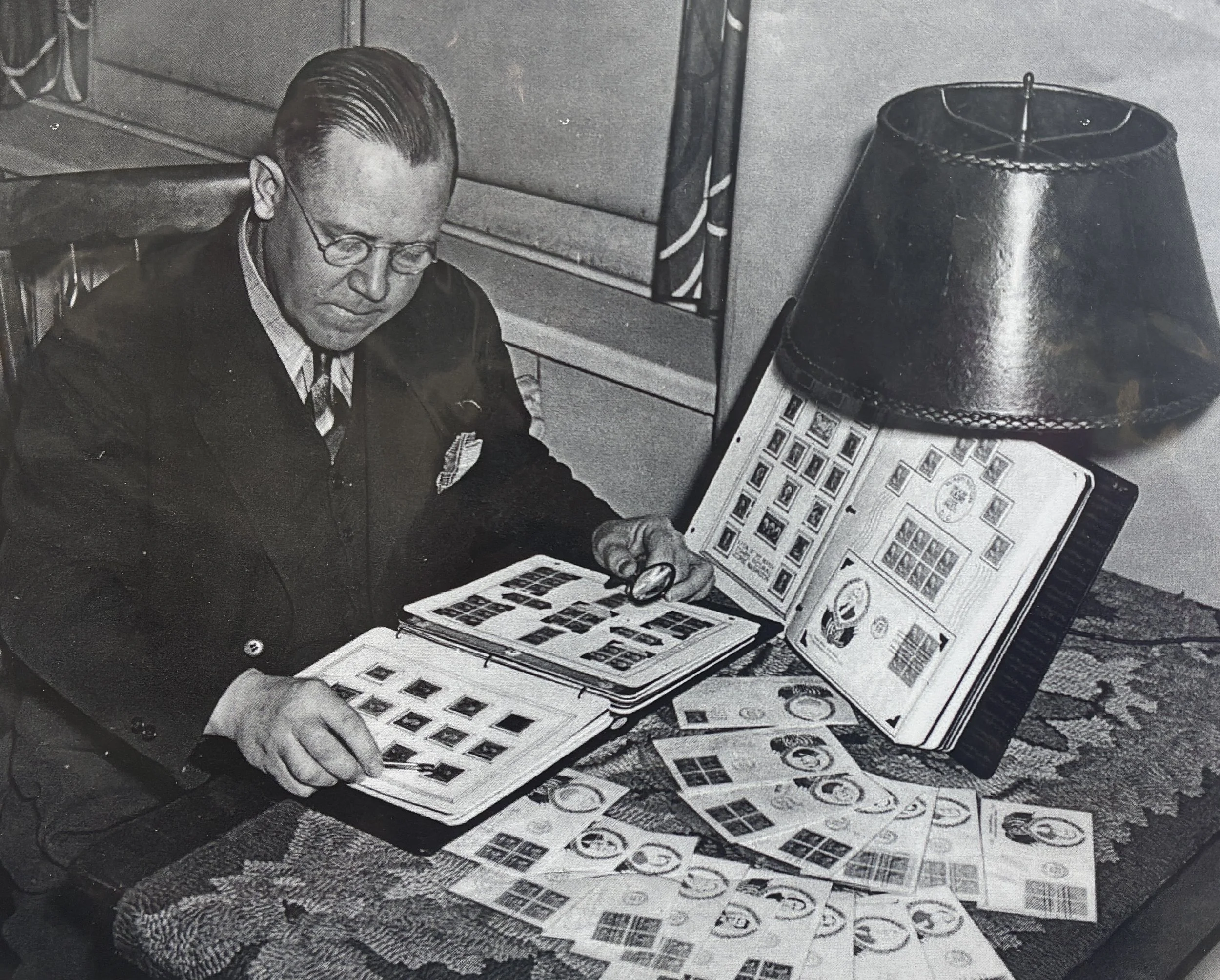
Charles Drechsler and his impressive stamp collection, retrieved from the Carlin Family Archives in August 2026. Currently on display at the Butternut Museum.
A Boy from Butternut who Revolutionized Fungal Science
Early Life
Charles Frank Drechsler was born on May 1st, 1892 on the Drechsler homestead near Bass Lake Road in Butternut, WI. His parents, Louis and Bertha Drechsler came from an economically depressed Germany to pursue a new life in agriculture just before Charles was born. The Drechslers spoke only German at home until the kids went to the Boness School, where Charles learned English alongside his six siblings.
While students in Butternut usually completed school only through 8th grade, Mrs. Ethel Horton inspired Charles to keep going to school because she saw his love of learning. Charles then lived with another local family in Park Falls, Wisconsin about 4 miles down the road — so that he could attend and then graduate Park Falls High School in 1909, an opportunity not available to the kids of Butternut at the time (Butternut finally got its high school program in 1914 after a terrible fire a year prior).
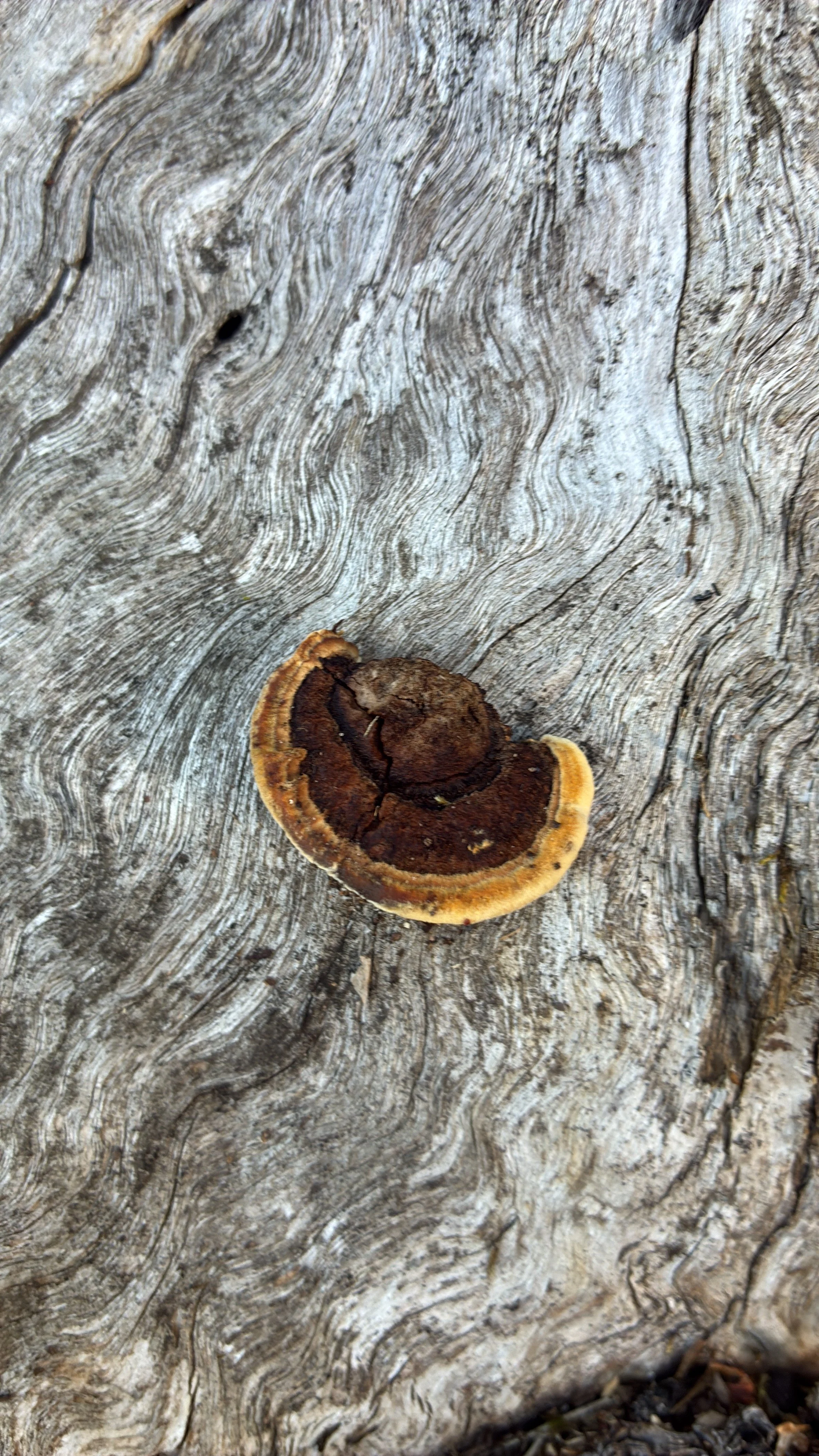
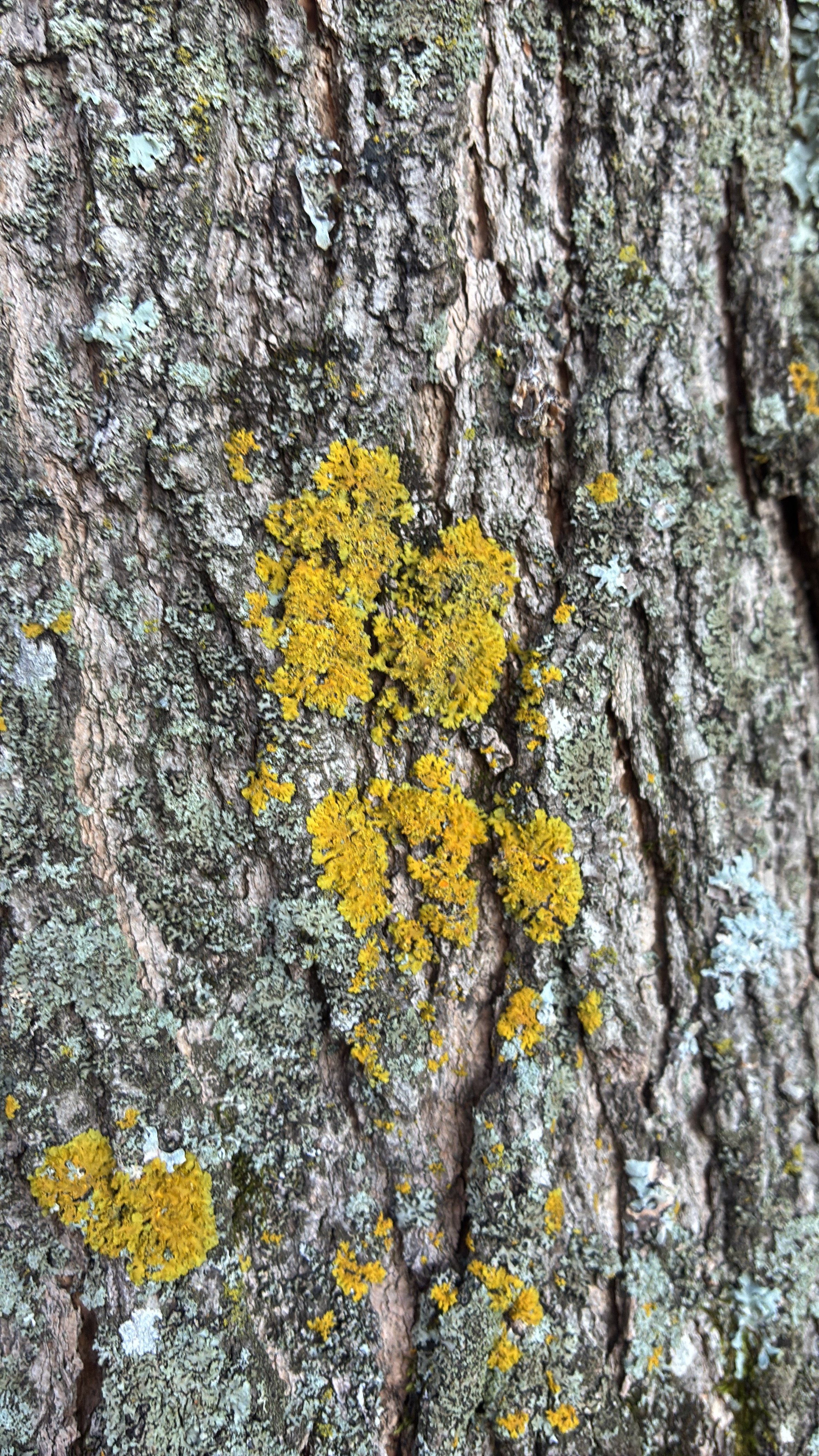
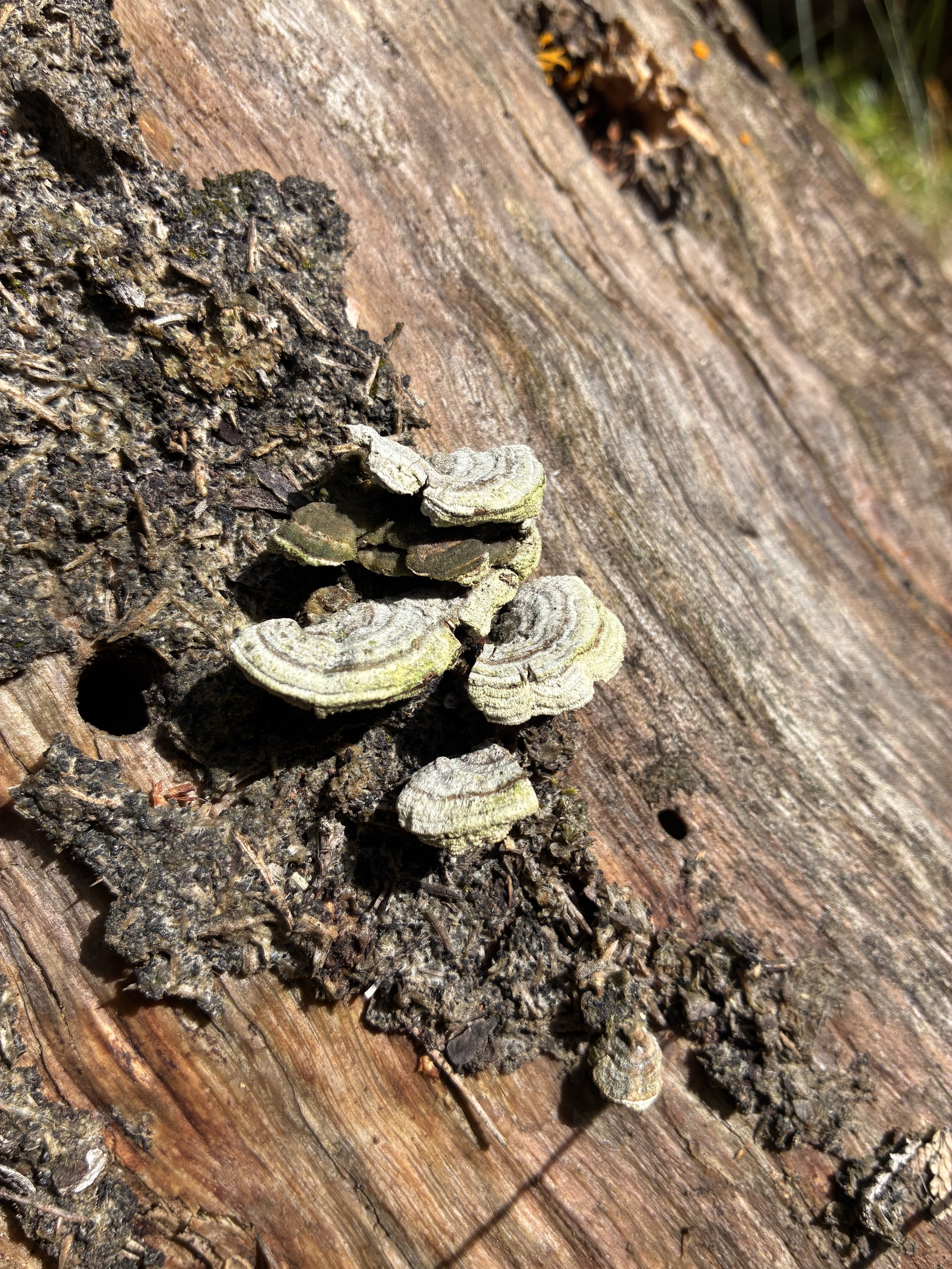
Now, you may have not been to Butternut - but let me assure you — Charles was certainly inspired by all of the nature he discovered while he was a young boy up in the Northwoods of Wisconsin. With different specimens like Common Lichen, Conifer Mazegill, White Rot, and Agarics abound to this day — Charles grew up and explored a world that is full of fungi long before his professional career took off.
Below are some fungi I actually observed up in Butternut this past summer.
Butternut → Harvard
According to family history passed down by his uncle Bruno Drechsler and now told to me by my Grandfather, after his high school graduation Charles walked from Butternut all the way to the University of Wisconsin, Madison, following the railroad tracks to pursue his insatiable curiosity. He originally attended UW Madison as an Engineering student, but after attending a mycology lecture he discovered his true passion for Fungi. Charles then went on to get both his Bachelors and Masters at UW Madison.
1914: Charles wins the Thayer Scholarship to study Botany at Harvard under Dr. Roland Thaxter.
During his time at Harvard, Charles was considered one of the best proteges of famous biologist Dr. Roland Thaxter — famous for his thousands of intensely accurate drawings. Thaxter’s teachings stressed drawing impeccable observations from one side and one angle rather than combining multiple sides and angles into one drawing, usually misconstructing the specimen. Drechsler and Thaxter both also incorporated stippling into their work. Some of Drechsler’s immaculate art from the Washington Academy of Sciences is below.
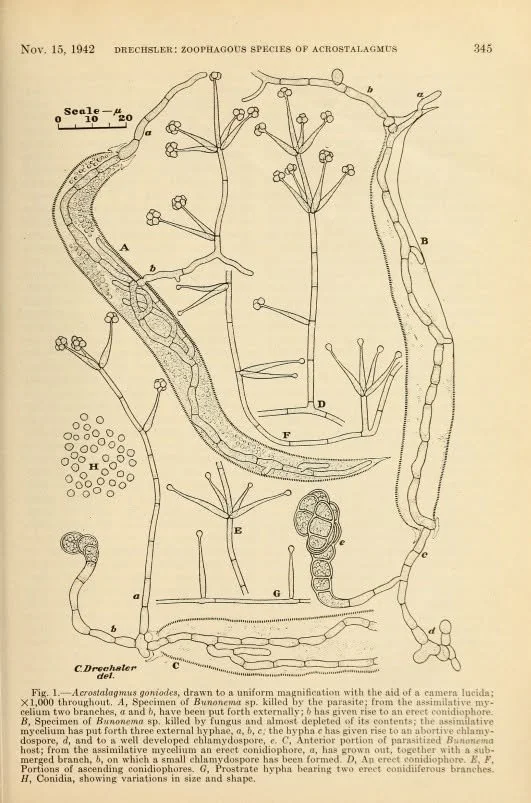
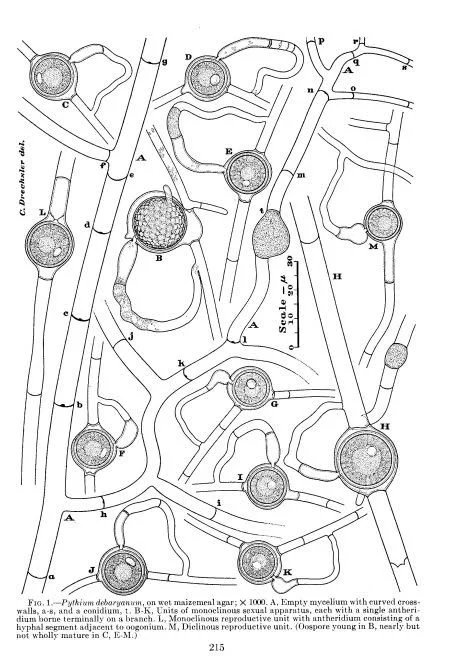

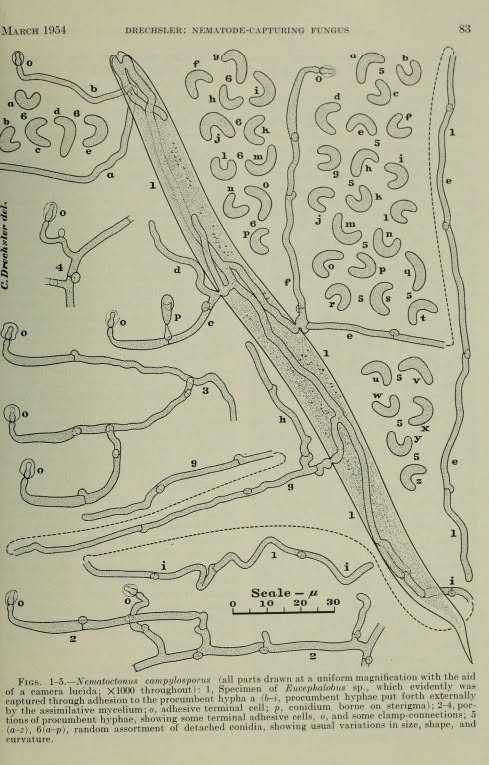
Evolving Mycology With The USDA
After a successful PhD at Harvard, Charles started in the USDA, known at the time as the Bureau of Plant Industry (BPI).
In a time where farming was an export for the United States, he observed how key fungal diseases occurred with conditions like overwatering, certain weather conditions, or damaging fertilizers.
Nitrogen fertilization (such as the Haber-Bosch Process) was quite popular post World War I especially in golf courses since the chemical made the course vibrantly green and crops grow at a rapid rate.
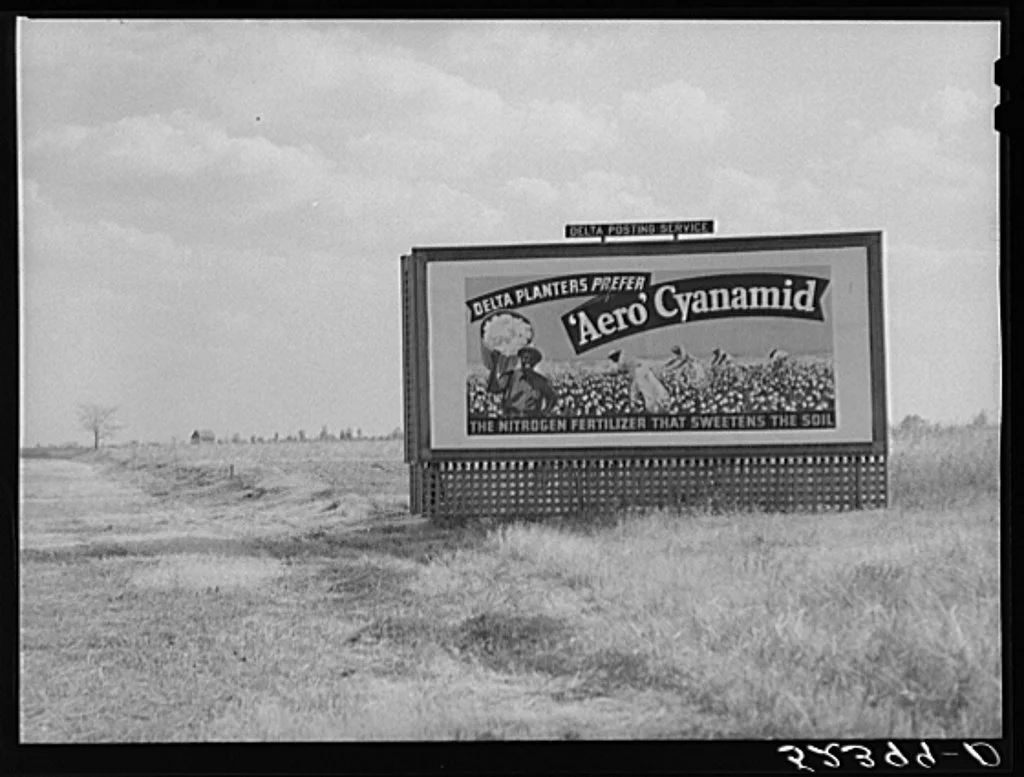
Billboard advertising fertilizer dusted over the cotton fields by aeroplanes. Mississippi Delta by Marion Post Wolcott. October 1939. Courtesy of the Library of Congress
However, this process created thinner cells walls, and Nitrogen increases the metabolism of plants — creating the overproduction of plant nutrients like ammonia. While the plant grows faster, it is processing way too many nutrients too fast. The overfertilization of these crops caused different types of Helminthosporium or plant rot, this was a catch all for all fungal diseases at the time.
The catch-all did not help propel the research of mycology, so Charles’ research broke this group into two distinct fungal genera: Eu-Helminthosporium and Cylindro-Helminthosporium - now known as Drechslera and Bipolaris in modern science.
Eu-Helminthosporium and Cylindro-Helminthosporium, according to Charles - vary in shapes, methods of germination, and the types of rot they produce. For example, Drechslera will cause Barley Stripe while Bipolaris will cause Common Root Rot.
One could say Drechsler is considered the Godfather of nematophagous mycology.
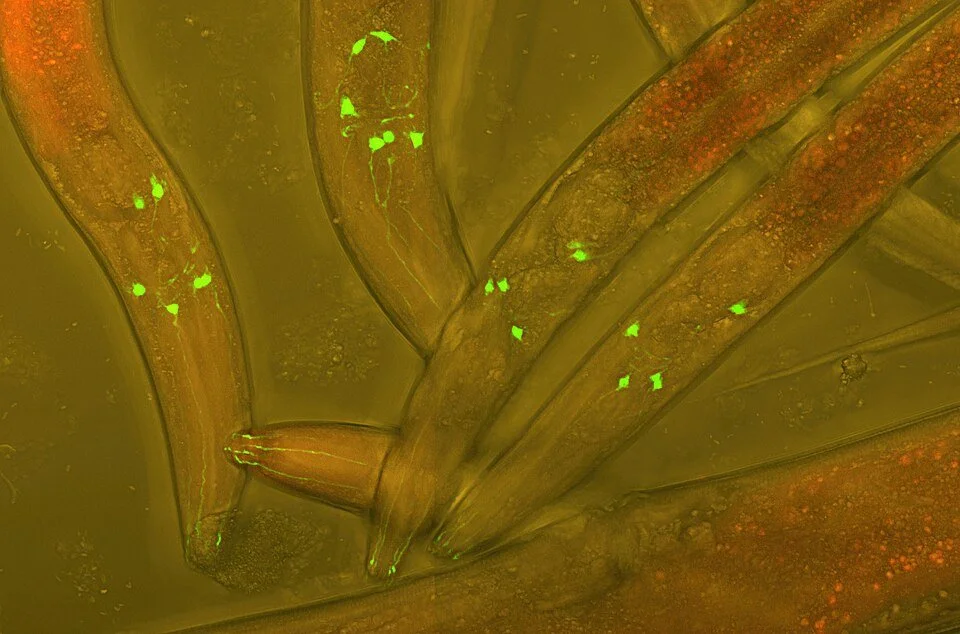
“Caenorhabditis elegans worms with green fluorescent protein” by Heiti Paves Courtesy of Wikimedia Commons. CC BY-SA 3.0.
Now, nematodes are usually referred to as these microscopic roundworms — they infect the plant and kill entire crop fields in the process. Drechsler actually identified types of fungi that constricts and traps nematodes and in return gave way to organic pesticides we know today as biopesticides.
Over 50 species of Nematode eating Fungi now used in many commercial farms and in the feed of our livestock were first drawn and described by Drechsler. His research gave way to using fertilizer that gives our plants a divine balance between Nitrogen, Potassium, and Phosphorous and restrengthened the American crop.
Charles is still considered a world authority for today’s mycologists with articles in the Journal of Botany in 1954 and 1956.
Dr. Charles Drechsler described over 150 new species in the 45 year career with the USDA, including 21 species of Oomycetes (water mold) and over 30 species of various carnivorous fungi. His special mixture of low nutrient cornmeal agar created the perfect sample to watch different bacteria and fauna interact in what he called a “predaceous relationship”.
Charles continued to honor his hometown of Butternut by teaching German for the USDA graduate school. Charles even stated that his knowledge of German helped him significantly in his studies.
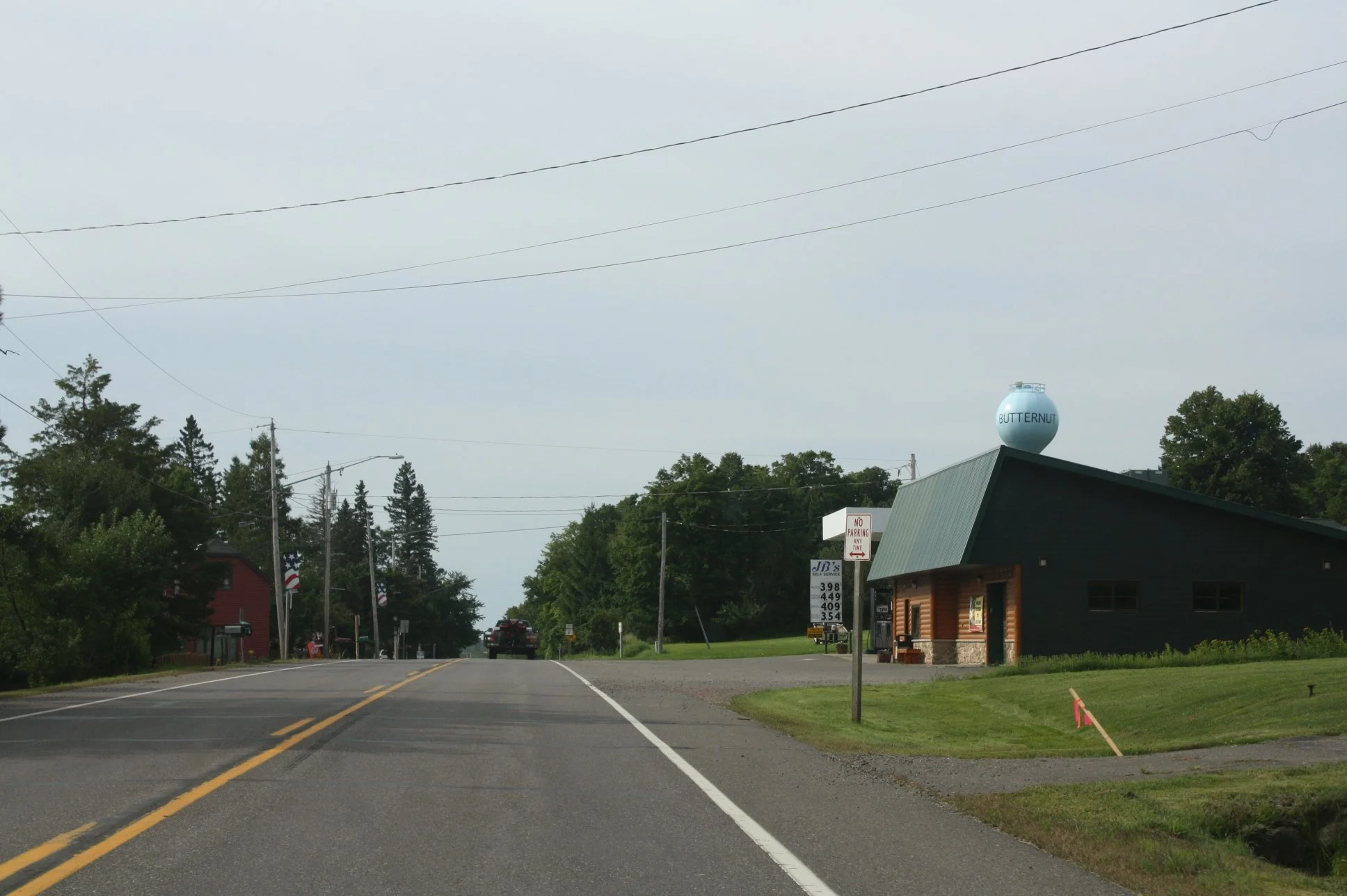
"Butternut, Wisconsin Downtown Looking South on WIS13" by Royalbroil. Courtesy of Wikimedia Commons. CC BY-SA 3.0.
Drechsler received the USDA Distinguished Service Award in 1958, just before his mandatory retirement in 1962. Despite this, he continued researching for 20 years after his retirement in his basement laboratory and even published 13 papers in that time.
Some of the most prominent work written by Charles Drechsler includes Some Graminicolous Species of Helminthosporium (1923) and Some Hyphomycetes that Prey on Free-Living Terricolous Nematodes (1937).
Drechslera and Other Honors
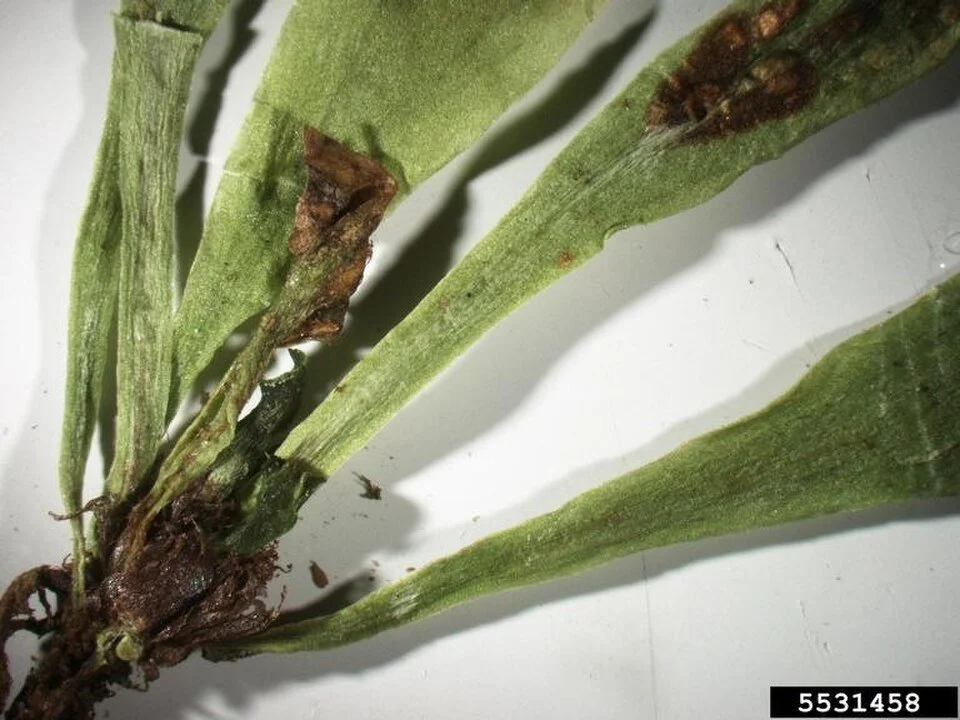
"Drechslera leaf spot asexual spore" by Cesar Calderon. USDA APHIS PPQ. Bugwood.org. Courtesy of Wikimedia Commons. CC BY 3.0 US.
In 1930, the Cylindro-Helminthosporium genus was then renamed as the genus group Drechslera in Charles' honor.
Organisms under the genus Drechslera are cylindrical, usually attack cereal crops, and prefer cool humid environments. Southern Corn Leaf Blight is a famous example of the genus, where Drechsler’s detailed original writeup of the fungus helped stave off the 1970 epidemic from destroying any more than the 15% of U.S. crops already wiped out.
Throughout his life, Charles was incredibly involved in the world of science. He served on the boards of the Microscopical Society (1945), The Botanical Society of America (1940), and even the Washington Academy of Sciences (1936) in addition to his elected Fellowship in the American Phytopathological Society (1966). The Mycological Society of America named Charles Drechsler a distinguished Mycologist in 1984 just two years before his death in 1986.
Charles passed away on February 5th 1986. He was a celebrated husband, scientist, artist, and world-authority on carnivorous fungi.
KC? Why did you write this?
Well, years ago my grandparents on my dads side told me about one of my relatives, Charles, who (legend has it) helped discover the effects of Penicillin.
I learned recently that Charles is my 1st cousin 4 times removed - aka the cousin of my great great great grandparents.
You can actually find a portion of this article as well as other artifacts of the Drechsler’s and many of my distant relatives in the Butternut History Museum in Butternut, Wisconsin.
The story of American colonization and immigration is ongoing coverage. The Drechsler’s would have not been able to settle in Wisconsin if it was not for the displacement of the Ojibwe Tribe by the United States Government in the 1830s.
I am looking to connect more people with their relatives. Are you curious? Contact me.
Enjoy my work? Consider donating to Katter.haus to keep this publication pay-wall free and bring you more articles, community events, and global art.


.jpg)